Funny Cookie Jars Bundle: A Designer's Review
As a designer who spends countless hours translating digital concepts into tangible stitched goods, I approach every new asset with a critical eye. The market is flooded with generic patterns, but finding a design that balances personality with technical viability is rare. Recently, I examined the Funny Cookie Jars Bundle, a product listed under Crafts and Graphics. While the metadata suggests this is primarily a word art vinyl decal cutting file for machines like Cricut Explore or Silhouette, my goal was to evaluate its potential as an embroidery design source. Can we adapt this playful concept into a high-quality machine embroidery project? Here is my honest assessment based on real-world application.
First Impressions: Mood and Visual Personality
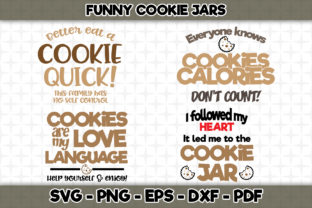
The first thing that strikes you about the Funny Cookie Jars Bundle is its whimsical energy. It leans heavily into a nostalgic, kitchen-centric theme that resonates immediately with home bakers and gift-givers. Visually, the layout relies on bold typography and simple iconography, which is promising for translation into thread. In the world of embroidery, simplicity often wins over excessive detail. Complex gradients and tiny serifs tend to get lost in the weave of fabric, but the chunky lettering and clear shapes found here suggest a design that could hold up well under a needle.
However, there is a crucial caveat. Since the original files are intended for paper crafting and vinyl cutting, they lack the specific stitch paths required for embroidery. As a professional, I know that importing a vector graphic meant for a cutting mat into an embroidery digitizing software requires significant work. The curves need to be smoothed, and the line weights adjusted to accommodate satin stitch or fill stitch mechanics. If you are looking for a ready-to-stitch machine embroidery design, you will likely need to digitize this yourself or hire a specialist. But as a creative starting point for a unique handmade product, the visual personality is undeniable.
Real-World Application: From Concept to Stitched Reality
Let’s imagine a practical scenario. You run a small shop specializing in personalized kitchen gifts. A client orders a custom embroidered apron for a friend who loves baking. You decide to use the Funny Cookie Jars Bundle concept. Instead of just printing the text, you adapt the "Cookie Jar" motif into a central design element.
When planning this embroidery project, I would focus on the placement. For an apron pocket or the chest area of a sweatshirt, the design needs to be large enough to be legible from a distance. The playful font style works exceptionally well for custom apparel because it feels friendly rather than corporate. Imagine this stitched onto a sturdy cotton tote bag; the contrast between the heavy canvas texture and the smooth fill stitch of the letters creates a tactile experience that elevates the perceived value of the item.
This bundle also fits perfectly into the holiday season. Think of holiday embroidery projects where you create limited-edition tea towels or pillow covers. The theme naturally aligns with Christmas cookies and festive gatherings. By using high-quality thread colors—perhaps warm browns, creams, and pops of red—you can transform a simple graphic into a premium finished product. For an Etsy seller or a craft fair vendor, these kinds of themed items often drive impulse buys because they feel personal and handmade.
Navigating Fabric and Hoop Constraints
While the design has great potential, experienced decorators know that not all fabrics are created equal. If you attempt to embroider the Funny Cookie Jars Bundle on thin or stretchy fabrics like jersey knit t-shirts, you risk puckering. The density of the text areas could cause the fabric to pucker if the stitch density is too high. In such cases, I strongly recommend using a tear-away or cut-away stabilizer appropriate for the weight of the garment.
Furthermore, consider the hoop size. If the design includes long lines of text or wide graphical elements, you must ensure your hoop can accommodate the full width without re-hooping, which can lead to registration errors. For smaller items like baby onesies or caps, you might need to scale the design down significantly. Be wary of scaling too small; the intricate details of the word art might turn into muddy blobs of thread. Always test the design on scrap fabric first to verify that the smallest characters remain readable after stitching.
Technical Considerations for Commercial Use
Before committing this design to a commercial run, you must address the licensing and technical format. The product description explicitly states this is a digital download for vinyl cutting. This means it is likely provided in formats like SVG, DXF, or PNG, not PES, DST, or XXX. To use this as an embroidery file, you will need to convert it. This conversion process is where the magic happens, but also where mistakes occur.
When digitizing, pay close attention to the corners of the letters. Sharp 90-degree angles in a vector file do not translate well to satin stitch columns. They need to be rounded slightly to prevent thread breakage and ensure a clean finish. Additionally, check the color separation. A design that looks great in black and white on a screen might require too many thread changes in reality, slowing down production time. For a craft business, efficiency matters. Limit the number of colors to three or four to maintain profitability while keeping the look vibrant.
If you plan to sell the finished embroidered items, you must confirm the licensing terms. Many digital assets sold for personal use have strict restrictions on commercial reproduction. Even if the license allows you to sell the physical goods, selling the digitized digital embroidery file itself is often prohibited. Always read the fine print to protect your brand and avoid legal issues.
Maximizing Value and Customer Trust
In the competitive world of handmade goods, presentation is everything. Using a unique design like the Funny Cookie Jars Bundle can set your shop apart from competitors using generic clip art. Customers appreciate designs that tell a story or evoke a specific feeling. When a buyer sees a tote bag with a cleverly stitched cookie jar motif, they aren't just buying a bag; they are buying a piece of character.
To maximize the appeal, take high-quality photos of your printable mockup or actual stitched samples. Show the design on different backgrounds—light linen, dark denim, soft fleece—to demonstrate versatility. This builds customer trust and helps them visualize the product in their own homes. Professionalism in your photography and product descriptions signals that you care about quality, which justifies a higher price point.
Ultimately, the Funny Cookie Jars Bundle offers a fantastic foundation for creative entrepreneurs willing to put in the extra effort to adapt it for embroidery. It captures a fun, accessible mood that appeals to a broad audience. Whether you are creating a one-off personalized gift or launching a new line of boutique branding merchandise, the key lies in how you execute the stitch work. With careful digitizing, proper stabilizer choice, and thoughtful color selection, this graphic can become a staple in your portfolio. Just remember to respect the source material's limitations and always test before you commit to a full production run.